
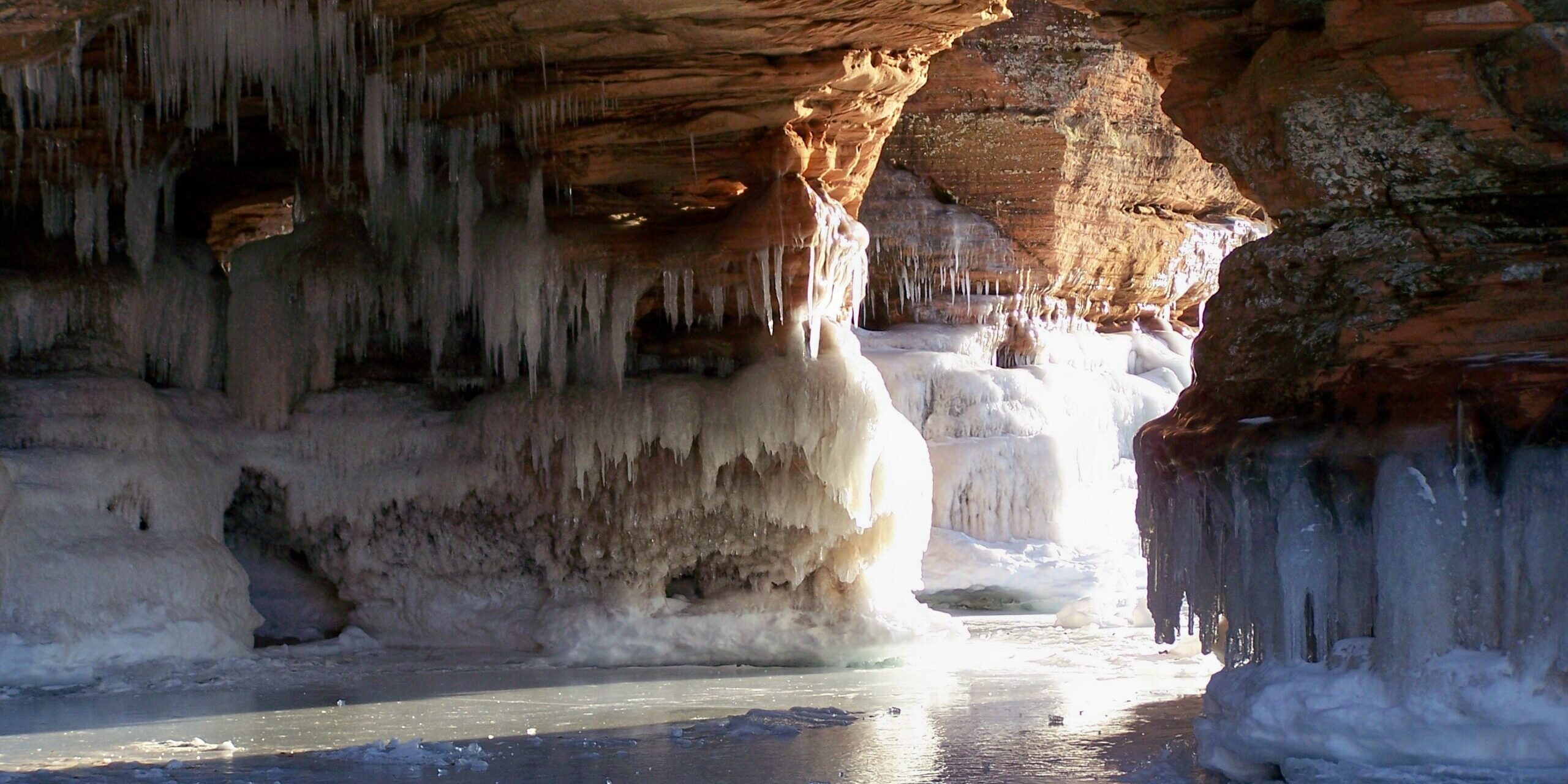
Visitors can once again access the famous ice caves at Apostle Islands National Lakeshore, marking the first public access to the frozen formations in more than a decade.
The National Park Service reopened access to the caves near Meyers Beach on Feb. 16 after extreme cold temperatures caused significant portions of Lake Superior to freeze. The ice conditions have created a rare opportunity for visitors to hike across the frozen lake and view the sandstone caves and ice formations, which have been inaccessible since 2015 due to unstable ice.
Superintendent BriAnna Weldon said the ice caves offer a unique winter experience but warned that safety remains a top concern.
“The ice caves are a rare and remarkable winter phenomenon,” Weldon said. “We know visitors are excited about the possibility of exploring the ice caves. Safety is our top priority, and conditions can change quickly on Lake Superior. Please check official sources before traveling.”
Park officials said access will remain open only as long as ice conditions are stable. A winter storm forecast this week could bring high winds capable of breaking apart the ice, potentially forcing closures.
Visitors must hike more than two miles round-trip from the Meyers Beach trailhead to reach the caves. Because the Meyers Beach parking lot is closed, visitors must park at designated off-site locations, including Bell Town Hall, Cornucopia Beach, and the Sand River Gravel Pit, and use shuttle service provided by Bay Area Rural Transit.
The Wisconsin Department of Transportation has also prohibited roadside parking along State Highway 13 while access remains open. (RELATED: Wisconsin Assembly Passes Bills on Financial Aid, Free Speech, and Gender Care Lawsuits)
Park officials urge visitors to dress appropriately for winter conditions, including wearing waterproof boots with traction, layering clothing, and bringing water and snacks. There are no facilities, food services, or garbage disposal at the caves, and visitors must carry out all trash.
A $5 daily fee is required to access the ice caves, with an additional $10 round-trip shuttle fee. Officials recommend checking the National Park Service website or calling the park directly for real-time updates, as conditions can change rapidly.
The Apostle Islands ice caves last opened widely in 2014, drawing more than 290,000 visitors and generating an estimated $10 million to $12 million economic impact for the Bayfield region. (RELATED: Wisconsin’s $370K Score Scam?)