
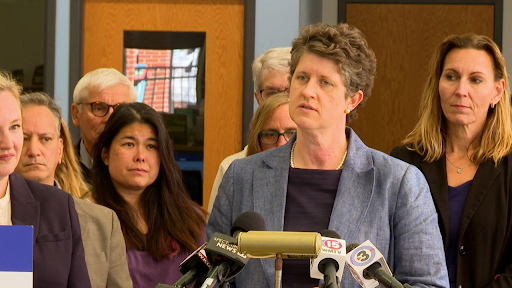
Wisconsin education officials spent nearly $370,000 on a closed-door conference at a resort before lowering academic benchmarks — triggering a sudden spike in reported student proficiency and renewed scrutiny over how the state measures student success.
According to a report from the Dairyland Sentinel, the Wisconsin Department of Public Instruction held a multiple day “standard setting” conference for the 2024 Forward Exam at the Chula Vista Resort in Wisconsin Dells.
The Sentinel says it ran a total cost of $368,885 in taxpayer spending. The same report shows that shortly after the benchmarks were changed, proficiency rates jumped, a roughly 12% increase under the new benchmarks.
Participants were required to sign confidentiality agreements that limited what could be publicly discussed. This agreement also came with warnings that exposure of what happen could trigger legal action and even district-level discipline.
The report also says that the DPI has not provided receipts despite records requests. (RELATED: Wisconsin Sheriffs Expand Federal Cooperation as Minnesota Drawdown Signals Shift)
The delayed records request undermines the accountability and raises possible conflicts with what was truly discussed in those meetings.
The Wisconsin Institute for Law & Liberty has labeled the Forward Exam as “useless.” They say the benchmark and labeling changes for the exam are making year-to-year comparisons harder and are creating the appearance of improvement by changed definitions rather than changed learning.
Using Wisconsin Department of Public Instruction (DPI) school finance records, in 2023–24 districts took in about $15.3 billion in revenue while educating 827,397 students putting the per-pupil revenue at an all-time high for Wisconsin district schools. The Wisconsin Policy Forum said that 2024 set a record for school referendum activity, with voters approving $4.4 billion in new funding authority statewide, including $3.3 billion in debt.
Included in this spending, is the addition of over 8000 non-instructional staff to school districts. (RELATED: Trans Musician Launches Long-Shot Bid for Wisconsin Congress Seat)
Since 2000, districts have 2,700 fewer teachers while adding more than 8,000 non-instructional staff positions, including growth in some administrative roles.